(General programming note for blog readers in the West Lafayette school district: I am a candidate in the 2020 West Lafayette School Board election. There are four seats open, and I would like to fill one of them. If you want to know more about my campaign, ask questions, request a yard sign, please go to https://masson.us/schoolboard.)
Taylor Wooten, writing for the Statehouse File, reports in an article about (Republican) Superintendent of Public Instruction, Jennifer McCormick’s endorsement of (Democratic) candidate for Attorney General, Jonathan Weinzapfel:
Weinzapfel, former chancellor of the Ivy Tech Evansville campus, has said he wishes to be a “champion for education” by fighting for enhanced pay for teachers and increased accountability for educational institutions that receive tax dollars.
The $86 million controversy regarding two Indiana virtual charter schools will be a subject of criminal prosecution if he becomes attorney general, Weinzapfel said. The Indiana Virtual School and Indiana Virtual Pathways Academy collected over $80 million from the state by falsifying student enrollment data.
(For those who don’t know, Weinzapfel was also mayor of Evansville from 2004-2011.)
That’s good news. I’ve said before that there is some indication that charter schools can be successful — but not under the conditions that Indiana is ever likely to put them on offer. In Massachusetts, strong regulation and oversight seems to make them complementary to the traditional public school system in a way that can benefit students for whom traditional public schools aren’t a great fit. In Indiana, we have a system with weak regulation and poor oversight where charter and voucher schools divert funds from traditional public schools, work at cross-purposes, provide a comparable or worse education, and — as we saw in the case of the virtual charter schools — line the pockets of their operators.
Indiana is unlikely to implement Massachusetts’ approach because the quality of educational opportunities appears to be mostly incidental to the motivations of voucher and charter school enthusiasts in Indiana. Higher priorities seem to be: a) reducing the influence of teachers unions; b) redirecting the flow of education money to friends and well-wishers of policymakers supporting charters; and c) using public money to subsidize religious education.
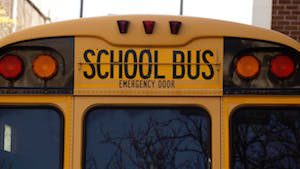
Fun fact: Indiana Virtual School used a Brink’s armored truck instead of a school bus.
The state’s experience with the Indiana Virtual School and Indiana Virtual Pathway Academy is instructive of how, under the state’s approach to charter schools, public money can be hideously misspent.
The joke is that dead people vote in Chicago. Apparently they go to school in Indiana. Stephanie Wang, reporting for Chalkbeat Indiana, has an article about the Indiana Virtual School and Indiana Virtual Pathway Academy which, among a number of other abuses, kept a dead kid on their claims for state money for two years after he died.
“Five years after two students moved to Florida, they reappeared on enrollment records for Indiana Virtual School and its sister school.
And nearly every one of the more than 900 students kicked out of Indiana Virtual School and its sister school in the 2017-18 school year for being inactive were re-enrolled the next school year, included in per-pupil funding calculations that netted the two online schools more than $34 million in public dollars last year.
These were among the ways that Indiana Virtual School and Indiana Virtual Pathways Academy allegedly inflated their enrollment to at least twice its actual size, according to the findings of a state examiner’s investigation released Monday.”
According to a State Board of Accounts audit filed in February of this year, the best estimate to date is that the schools improperly cost the State $86 million. It would definitely seem appropriate to follow the money trail identified by the SBOA and, where appropriate, prosecute individuals lining their pockets instead of educating our kids. So, it’s good to see Mr. Weinzapfel taking an interest. Hopefully Superintendent McCormick’s endorsement will carry some weight in the Attorney General election. (To be candid, I was skeptical of Dr. McCormick when she was elected, but that skepticism was misplaced. She’s been an excellent Superintendent of Public Instruction, particularly given the political environment in which she has been navigating.)
(I am running for West Lafayette School Board in the 2020 election. If you’re interested in my candidacy, check out my campaign website. If you like what you see & live in West Lafayette, I’d appreciate your vote. Tell your friend & request a yard sign!)