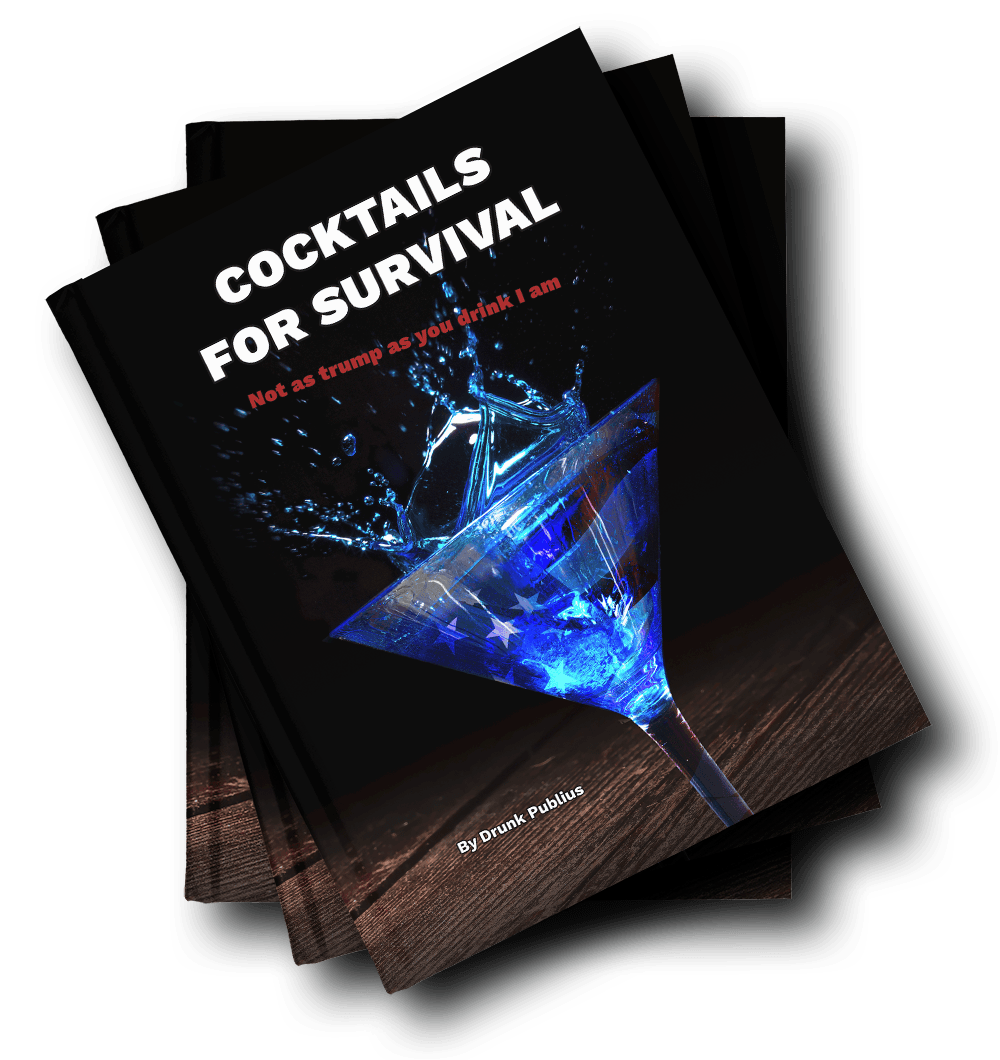
 I am going to engage in a bit of shameless promotion for a moment. My family and friends have been involved in the Drunk Publius effort resulting in the creation of “Cocktails for Survival: not as trump as you drink i am.” It is a cocktail book that received some attention from the newspaper a few weeks ago, and is now available for purchase. If you love Trump, take a dim view of alcohol, and on the whole would prefer not to laugh, then this book is not for you. Otherwise, you might like it. It includes drinks like “The Wall,” “The Bad Hombre,” “Trumple Thinskin,” “The 400 Pound Hacker,” and many more. Maybe it would make a good gift to lift the spirits of a friend? Make a good centerpiece or an inauguration party (inauguration parties are a thing, right?) In any case, the idea is to get together with friends, have a few drinks, have a few laughs, and generally soften the blow of what looks to shaping up as a bumpy next few years. Putting the “Gallo” in “gallows humor,” so to speak.
Just as a taste, here is a bit from the Societal Collapse:
I heard, as it were, the sound of thunder. One of the four beasts saying, “come and see.” And I saw . . . the recipe for this drink. The original ingredients were pestilence, war, famine, and death, but we’ve made a few substitutions. Slouch your way toward Bethlehem with this refreshing drink. Pale horse optional.
So, if it sounds interesting, drop by Amazon or TrumpedUpBooks.com to buy a hard copy or an e-book. And if you can pass it along to like minded friends, you’d really be doing us a solid.